Small Footprint, Big Living: A Practical Design Playbook for Getting the Most From Your Unit at 105 Garth Road
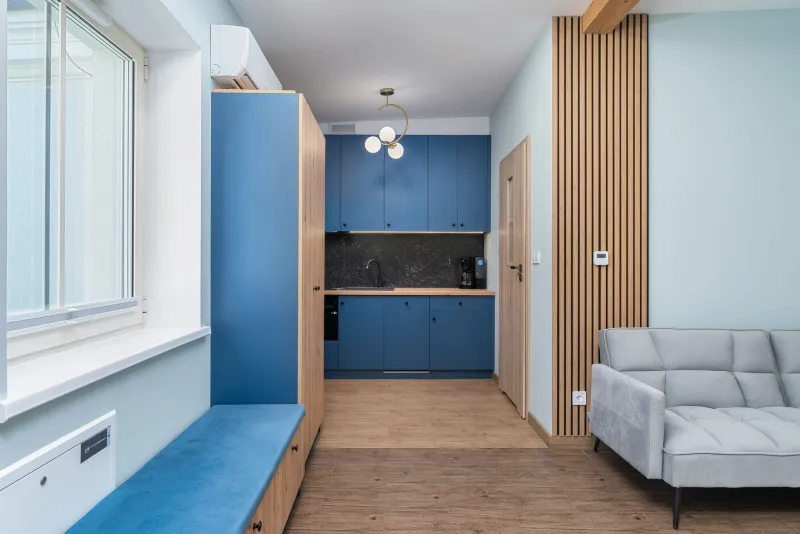
The relationship between square footage and livability is far less fixed than most people assume. A well-designed smaller apartment can feel more comfortable, functional, and even more luxurious than a poorly arranged space twice its size. For residents of 105 Garth Road — particularly those in units similar to 6F12 — understanding this principle is the first step toward creating a home that genuinely serves your life rather than merely housing it.
What follows is a practical, room-by-room framework for maximizing every square foot at your disposal, drawing on established principles of interior design, modern storage methodology, and smart home technology.
Start With a Spatial Audit Before Buying a Single Piece of Furniture
The most common mistake urban apartment dwellers make is purchasing furniture before fully understanding how their space actually functions. Before investing in any new pieces, spend at least two weeks living in your unit and observing how you naturally move through it. Where does morning light fall? Which walls feel cramped and which feel open? Where do you instinctively set things down?
Once you have a clear picture of your natural movement patterns and the unit's light behavior throughout the day, sketch a rough floor plan — even a hand-drawn one will suffice. Note the location of windows, outlets, radiators, and fixed elements like closets and kitchen fixtures. This document becomes your reference point for every design decision that follows.
For 6F12-style layouts, pay particular attention to the relationship between the living area and the sleeping space. These zones often share visual real estate, and how you define their boundaries will significantly affect how spacious the entire unit feels.
Furniture Selection: Scale Is Everything
In a compact urban unit, oversized furniture is the single fastest way to undermine a sense of space. A sectional sofa that works beautifully in a suburban living room will overwhelm a Westchester apartment and restrict traffic flow in ways that quickly become frustrating.
The solution is not to purchase smaller versions of everything, but rather to be selective about what earns floor space. Consider the following principles:
Invest in multifunctional pieces. A dining table with fold-down leaves, a bed frame with integrated storage drawers, an ottoman with interior storage — these items justify their footprint by serving more than one purpose. In a well-appointed unit at 105 Garth Road, a thoughtfully chosen sleeper sofa can transform a living room into a guest room without any sacrifice in daily comfort.
Prioritize vertical space. Wall-mounted shelving, tall bookcases, and floor-to-ceiling drapery all draw the eye upward and create the perception of greater height. In units with standard eight or nine-foot ceilings, this technique can dramatically alter how a room feels.
Choose legs over skirts. Furniture that sits on visible legs — sofas, chairs, side tables — allows light to pass beneath, which creates a sense of visual openness. Pieces that sit flush with the floor visually anchor the room and can make it feel heavier than it is.
Storage Solutions That Disappear Into the Design
Effective storage in an urban apartment should be largely invisible. The goal is not to accumulate more containers, but to create systems that keep possessions organized and out of sight without requiring dedicated storage rooms.
Utilize the space beneath your bed. Low-profile rolling bins, vacuum-sealed bags for seasonal clothing, and purpose-built under-bed drawers can collectively hold a remarkable volume of items that would otherwise occupy closet space.
Audit your closets with fresh eyes. Most apartment closets are used inefficiently. Adding a second hanging rod, installing shelf dividers, and using the back of closet doors for hooks or small organizers can effectively double usable closet capacity without any structural modification.
Think about entryway organization. In a unit like 6F12, the entry area sets the tone for the entire apartment. A wall-mounted coat rack, a narrow console table with drawer storage, and a small bench with interior storage collectively manage the daily chaos of keys, bags, and outerwear without consuming meaningful floor space.
Optimizing Natural Light: The Most Underutilized Design Tool
Natural light is perhaps the most powerful tool available to apartment dwellers, and it costs nothing to maximize. Units at 105 Garth Road benefit from thoughtful window placement; leveraging that light effectively can make your space feel substantially larger and more welcoming.
Keep window treatments simple and light-filtering. Heavy blackout curtains have their place in the bedroom, but in living spaces, sheer linen or cotton panels that diffuse rather than block light are preferable. Mounting curtain rods several inches above the window frame and extending them beyond the frame's width on each side allows curtains to frame the window without obscuring it.
Position mirrors strategically. A well-placed mirror opposite or adjacent to a window reflects natural light deeper into the room. This is not a new technique, but it remains one of the most effective available. In a compact unit, a large mirror on a prominent wall can appear to double the room's perceived depth.
Choose reflective and light-toned surfaces. Glossy finishes, light wood tones, and pale wall colors all amplify available light. This does not mean every surface must be white — warm whites, soft greiges, and muted sage greens all work well — but avoiding dark, matte surfaces in primary living areas will meaningfully brighten the space.
Smart Home Technology Worth the Investment
For residents of a modern building like 105 Garth Road, integrating smart home technology is both practical and increasingly straightforward. A few targeted investments can meaningfully improve daily comfort and energy efficiency.
Smart thermostats such as the Ecobee or Google Nest learn your schedule and adjust temperature accordingly, reducing energy costs while ensuring your home is always comfortable when you arrive.
Wireless lighting systems — Philips Hue being the most widely adopted — allow you to adjust color temperature throughout the day, supporting alertness in the morning and relaxation in the evening without changing a single fixture.
Compact air purifiers with HEPA filtration are particularly valuable in urban environments and can be integrated into voice-activated smart home ecosystems for hands-free operation.
The key with smart home technology is restraint. Invest in systems that solve a specific problem in your daily routine rather than accumulating devices for their own sake.
Final Thought: Design for the Life You Actually Live
The most effective apartment designs are not the ones that appear most polished in photographs — they are the ones that support the actual rhythms of the person living in them. Before finalizing any design decision at 105 Garth Road, ask whether it serves your genuine daily habits. A home office setup that accommodates your work schedule, a kitchen organized around how you actually cook, a living space arranged for the way you genuinely relax — these considerations will always outperform aesthetics alone.
Your unit at 105 Garth Road is not a limitation to work around. It is a canvas with specific dimensions, and the most satisfying approach is one that treats those dimensions as a design challenge rather than a constraint.