Transit as Wealth: How Metro-North Access Quietly Builds Financial Freedom for Westchester Residents
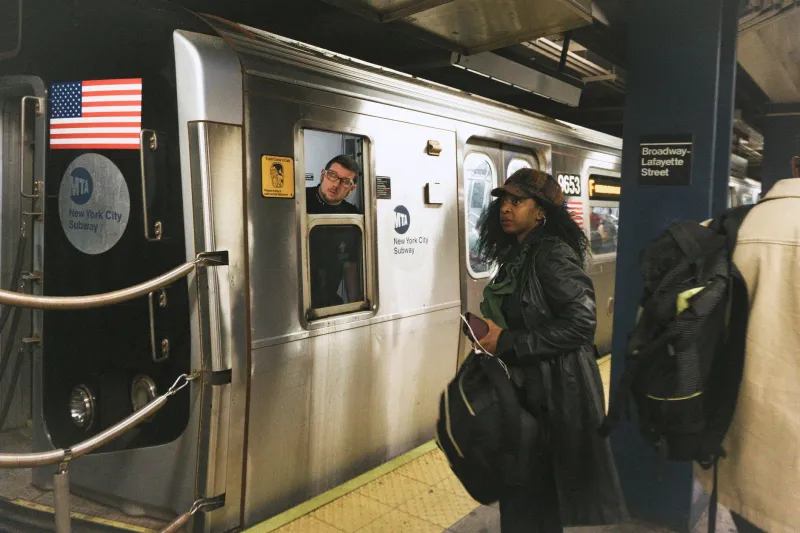
Most conversations about public transit begin and end with the commute. How long is the ride? How crowded are the trains? Is there parking at the station? These are reasonable questions, but they miss something more consequential — the way that consistent, reliable access to a major transit corridor fundamentally alters the financial and personal calculus of where you live.
For residents at 105 Garth Road, Unit 6F12, the proximity to Metro-North is not merely a convenience. It is, upon closer examination, one of the most durable advantages the address offers — one that reveals its full value not in a single month, but across years of compounding benefit.
The Carrying Cost Nobody Calculates
Consider what it costs to maintain a car-dependent lifestyle in suburban Westchester. According to the American Automobile Association, the average annual cost of vehicle ownership in the United States now exceeds $12,000 when insurance, financing, depreciation, fuel, and maintenance are factored together. Many Westchester households carry two vehicles precisely because their residential location demands it.
A household situated steps from a functional Metro-North station operates under a different set of assumptions. One vehicle — or in some cases, none at all — becomes a realistic option rather than a reckless one. The financial delta between a one-car and two-car household, compounded over a decade, can easily approach six figures. That is capital that might otherwise sit depreciating in a driveway.
This is not a minor footnote. It is a structural shift in how housing costs are understood. The monthly rent or mortgage figure for a unit at 105 Garth Road looks different when it is weighed against the total household transportation budget it enables you to reduce.
NYC Access Without Manhattan Pricing
One of the most distinctive features of upper Westchester's value proposition is the ability to access New York City on demand without absorbing New York City's cost of living. Manhattan rents for comparable square footage routinely run two to three times higher than what residents pay in communities like Scarsdale or the broader upper Westchester corridor.
Metro-North's Harlem Line connects this region to Grand Central Terminal in under an hour, which means the full cultural, professional, and social infrastructure of New York City remains within reach — without requiring permanent residency in it. Residents can maintain careers in Manhattan, attend evening performances, meet clients, or visit family across the boroughs, then return to a quieter, more spacious residential environment the same night.
This optionality has real monetary value. It expands the pool of employers accessible without relocation, broadens social and professional networks, and enables a quality of life that would cost substantially more to replicate in the five boroughs.
What the Resale Data Suggests
Academic research on transit-oriented development has consistently identified a measurable premium attached to properties near quality rail service. Studies conducted in various northeastern markets — including analyses specific to Metro-North corridors — have found that homes within a half-mile of a station tend to appreciate at rates that outpace comparable properties located further from transit infrastructure.
The mechanism is straightforward: transit proximity reduces a buyer's dependency on external variables like gas prices, traffic conditions, and road infrastructure. It offers a form of residential resilience. When fuel costs spike or highway congestion worsens — as both have done repeatedly in recent years — the relative desirability of walkable transit access increases. Demand concentrates around stations, and values follow.
For a buyer evaluating 105 Garth Road over a ten-year ownership horizon, this dynamic deserves serious weight. The unit's location is not simply convenient today; it is positioned within a category of residential real estate that has historically held its appeal through varying economic climates.
The Lifestyle Dimension
Beyond the financial architecture, transit access reshapes daily life in ways that are harder to quantify but no less real. The psychological burden of driving — navigating traffic, finding parking, managing vehicle maintenance schedules — is well-documented as a source of chronic low-grade stress. Residents who can walk to a train and arrive at their destination without having operated a vehicle for an hour report meaningfully different experiences of their mornings and evenings.
Time, too, is reorganized. A train commute is recoverable time — time that can be spent reading, working, or simply decompressing. A highway commute is largely not. Over five years of daily commuting, the difference in productive or restful hours accumulated is substantial.
For families with children, transit access also introduces a measure of independence earlier than car-dependent environments allow. Teenagers in walkable, transit-connected communities can navigate their own schedules — reaching activities, schools, and social engagements — without requiring a parent to serve as a full-time driver.
A Long View Worth Taking
The proximity of 105 Garth Road to Metro-North is easy to list as an amenity and equally easy to undervalue. It appears on a spec sheet alongside in-unit laundry and updated appliances, which does not do justice to its actual significance.
Over a decade, transit access shapes spending, determines resale positioning, affects career flexibility, and influences the texture of daily life. It is the kind of advantage that does not announce itself loudly in year one but proves its worth steadily — in commutes that do not exhaust you, in savings that accumulate without effort, and in a property that retains its appeal to the next generation of buyers for precisely the same reasons it appealed to you.
For those evaluating residential options in upper Westchester, that is a case worth making carefully — and hearing in full.