The Quiet Advantage: Why Scarsdale Remains Invisible to the Corporate Relocation Map
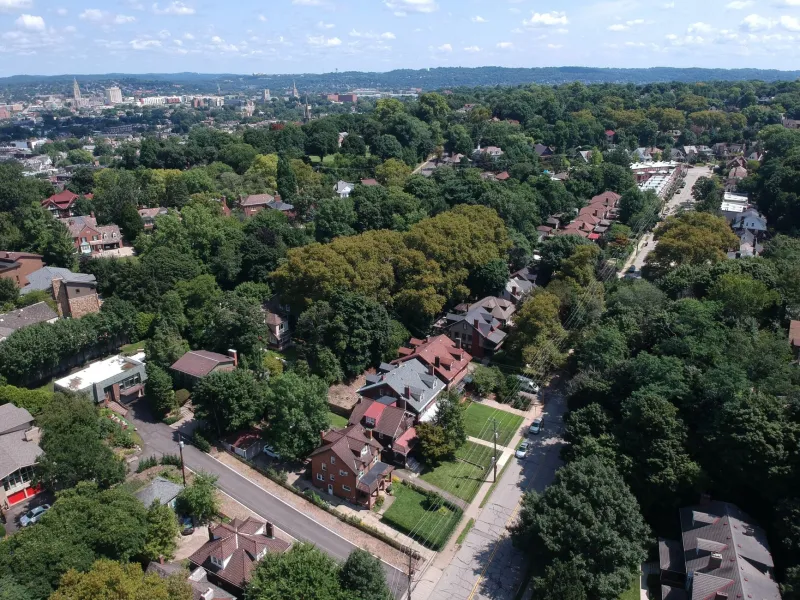
There is a peculiar dynamic at work in the northeastern suburban real estate market. Communities with well-documented reputations—Greenwich, Montclair, Westport—attract consistent attention from corporate relocation firms, remote-work lifestyle publications, and the broader media apparatus that shapes where ambitious families choose to plant roots. Scarsdale, by contrast, tends to be absent from those conversations, even as it quietly outperforms many of its better-publicized counterparts across nearly every measurable quality-of-life dimension.
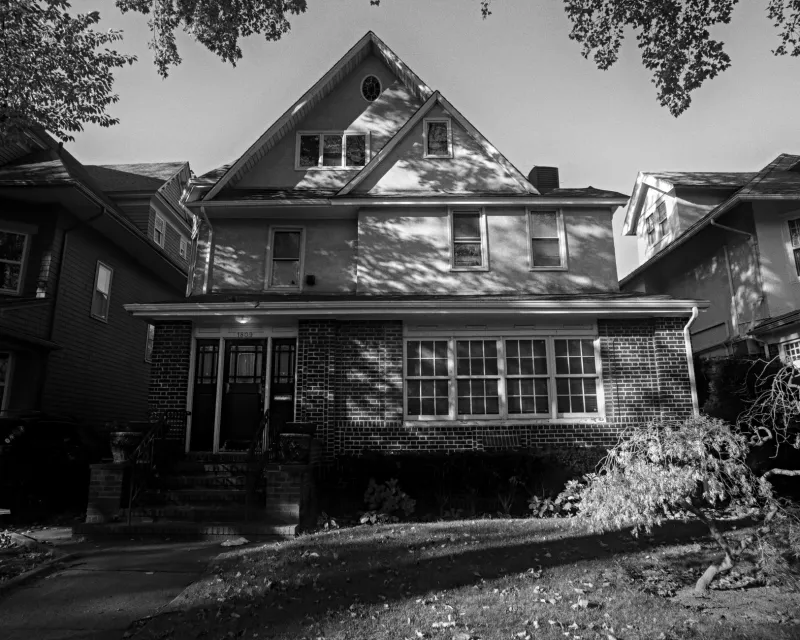
For anyone already living at or seriously considering an address like 105 Garth Road in Scarsdale, this asymmetry is worth understanding in some depth. It shapes market conditions, community character, and ultimately the long-term calculus of what a home here is worth—not merely in dollars, but in the broader sense of what a residential decision actually delivers.
How the Relocation Industry Builds Its Shortlists
Corporate relocation is a structured, consultant-driven process. When a company moves an executive from Austin to the New York metropolitan area, or when a remote worker in Seattle begins researching northeastern alternatives, the communities that appear on their radar are largely those that have invested in visibility infrastructure: chambers of commerce with active national outreach, real estate boards that participate in relocation trade associations, and local governments that produce polished marketing materials aimed at newcomers.
Scarsdale has historically done little of this. The village's identity is rooted in an assumption of self-sufficiency—that its reputation will travel by word of mouth among those already connected to its social and professional networks. For generations, that approach worked reasonably well. The community maintained its character, its schools sustained their excellence, and property values reflected the desirability of the address among those who knew to look for it.
The unintended consequence, however, is that Scarsdale rarely appears in the destination guides, relocation handbooks, or digital content ecosystems that now shape residential decision-making for families arriving from outside the New York metropolitan orbit entirely.
The Geography of Awareness
Consider the specific challenge facing a family relocating from, say, the Research Triangle in North Carolina or the Pacific Northwest. Their frame of reference for northeastern suburbs is likely constructed from cultural shorthand: the Hamptons, the Gold Coast, the towns that appear in television dramas or lifestyle journalism. Within that framework, Westchester County as a whole receives less coverage than Fairfield County across the border in Connecticut, and within Westchester, Scarsdale receives less coverage than communities with more aggressive marketing postures.
This is not a reflection of underlying quality. It is a reflection of marketing investment, media relationships, and the self-reinforcing nature of attention economies. Communities that are written about attract more writers. Communities that attract more writers become reference points for relocation consultants. Reference points become shortlists. Shortlists become decisions.
Scarsdale, in declining to participate aggressively in that cycle, has remained somewhat outside it—visible to those with regional knowledge or existing connections, but effectively invisible to the broader national audience of mobile professionals that has grown substantially in the post-pandemic era.
What the Information Gap Means for Current Residents
The practical implications of this dynamic are genuinely interesting, and they cut in more than one direction.
On one hand, the relative absence of speculative demand from out-of-state buyers has historically contributed to a degree of price stability that more heavily marketed communities do not always enjoy. Markets driven by external attention can experience sharper cyclical swings—rising rapidly when a community becomes fashionable, correcting when the next destination captures the spotlight. Scarsdale's more organically constructed demand base has tended to produce steadier, if less dramatic, appreciation patterns.
On the other hand, as remote work has genuinely expanded the geographic radius within which professionals are willing to consider residential options, the universe of potential buyers for addresses like 105 Garth Road has grown larger than at any previous point. The information gap that once kept Scarsdale off national shortlists is narrowing, not because the community has changed its marketing posture, but because the tools available to individual buyers for conducting independent research have improved substantially.
A family in Denver or Atlanta that might once have relied entirely on a relocation consultant's shortlist can now conduct granular research into school quality metrics, commute time calculations, walkability indices, and neighborhood-level crime data entirely on their own. When they do, Scarsdale tends to perform exceptionally well—which suggests that the information asymmetry, while persistent, is not permanent.
Community Character as a Byproduct of Obscurity
There is another dimension to this conversation that deserves consideration, and it is less purely financial in nature. Communities that attract significant attention from external marketing ecosystems also tend to attract the social dynamics that accompany rapid demographic turnover: the erosion of long-term resident networks, the displacement of local institutions by nationally branded alternatives, and a gradual homogenization of community character.
Scarsdale's relative obscurity to the corporate relocation circuit has, in a meaningful sense, protected it from some of those pressures. The community retains a texture that is genuinely local—civic organizations with real membership, neighborhood relationships that extend across years rather than lease cycles, and a sense of shared investment in the village's institutions that is difficult to manufacture through marketing.
For residents of 105 Garth Road, this translates into something that does not appear on any comparative market analysis but is nonetheless real: the experience of living in a place that feels like a community rather than a product.
The Window That Currently Exists
Market conditions do not remain static, and the information gap that has characterized Scarsdale's national profile is unlikely to persist indefinitely. As remote-work permanence continues to reshape where professionals are willing to live, and as independent research tools continue to surface communities on the basis of data rather than marketing spend, Scarsdale's objective advantages will become more widely legible to a broader audience.
For those currently evaluating an address like 105 Garth Road, the relevant question is what that eventual normalization implies. Greater national visibility tends to expand the buyer pool, which tends to exert upward pressure on prices, which tends to compress the value proposition that currently makes the address compelling relative to its more prominent competitors.
The window in which Scarsdale can be discovered rather than competed for is a real feature of the current market moment. It will not remain open indefinitely. Those who recognize the information asymmetry for what it is—a temporary condition rather than a permanent characteristic—are positioned to benefit from it in ways that later arrivals, operating in a more fully priced market, will not be.
The quiet advantage, in other words, is precisely that: quiet. And for the time being, that quietness is part of what makes 105 Garth Road worth paying attention to.