Against the Grain: How Scarsdale's Location Quietly Rewards Professionals Who Work Outside Manhattan

Against the Grain: How Scarsdale's Location Rewards Professionals Who Work Outside Manhattan
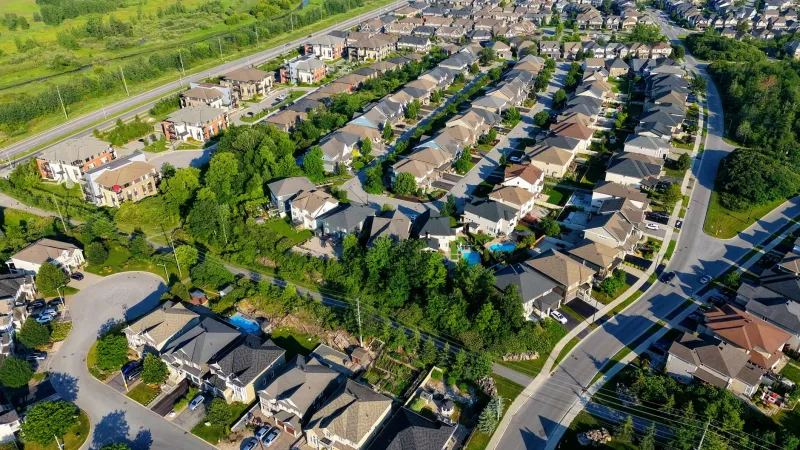
Every morning, the Bronx River Parkway fills with a familiar kind of suffering. Southbound lanes compress into a slow crawl of brake lights stretching from White Plains toward the Cross Bronx, while the northbound lanes—traveling in the opposite direction—move with something approaching ease. The professionals in those northbound lanes are not simply lucky. In many cases, they made a deliberate choice.
For residents of 105 Garth Road, that choice is built into the address itself.
The Geometry of Peak-Hour Traffic
Traffic congestion is not random. It follows predictable geometric patterns tied to where workers live and where they are employed. In the New York metropolitan region, the dominant pattern is well established: residential populations in Westchester, Rockland, and Fairfield counties funnel southward each morning toward Manhattan employment centers, then reverse course in the evening. The infrastructure—highways, rail lines, bus networks—was largely designed to accommodate this flow.
What this means in practice is that anyone traveling against that primary current enjoys a structural advantage that no amount of personal productivity hacking can replicate. The commute becomes shorter not because of individual cleverness but because the road itself is less contested.
According to traffic data compiled by the New York State Department of Transportation, average southbound speeds on the Bronx River Parkway between Scarsdale and the city line during the 7:00–9:00 a.m. window routinely fall below 25 miles per hour during peak periods. Northbound speeds during the same window frequently exceed 50 miles per hour on identical stretches of pavement. The asymmetry is not marginal. It is structural.
What Scarsdale's Position Actually Means
Scarsdale sits at an intersection of commuting corridors that makes it unusually well-suited for professionals whose employment is anchored not in Midtown Manhattan but in the arc of corporate campuses, medical centers, financial offices, and technology hubs that stretches from White Plains through Greenwich to Stamford.
From 105 Garth Road, White Plains—home to a significant concentration of corporate headquarters and professional services firms—is reachable by car in under ten minutes during morning peak hours. The Westchester Medical Center campus in Valhalla sits roughly fifteen minutes to the north. Greenwich and Stamford, where hedge funds, private equity firms, and major financial institutions maintain substantial operations, are accessible via I-287 and the Merritt Parkway in a corridor that, again, runs counter to the dominant commuting flow.
Metro-North's Harlem Line, which serves the Scarsdale station directly, provides additional optionality. Professionals commuting to Grand Central can do so efficiently when necessary, but those working at stations along the line—North White Plains, Tuckahoe, Crestwood—can board trains that are substantially less crowded than the Manhattan-bound cars that fill to capacity further down the line.
Professionals Who've Run the Numbers
The professionals who have settled into this contrarian positioning tend to be deliberate about it. A corporate attorney whose firm relocated its primary operations from Midtown to Stamford several years ago describes the recalibration as one of the most consequential financial decisions she has made outside of the purchase of her home itself. Her commute, previously an hour-plus door-to-door into Manhattan, now runs approximately twenty-two minutes by car. She estimates the recovered time at nearly four hours per week—time that compounds across a career into something that resists easy quantification but is unmistakably real.
A physician affiliated with a White Plains hospital network makes a similar calculation. His commute from Scarsdale runs against the dominant morning traffic pattern, leaving him at his desk while colleagues who chose Manhattan-adjacent addresses are still navigating the FDR or the BQE. He notes that the psychological dimension is as significant as the temporal one: arriving at work without the accumulated stress of gridlock is, in his view, a form of occupational health that the real estate market has not yet learned to price.
The Connecticut Corridor
Fairfield County deserves particular attention in this analysis. Greenwich, Westport, Stamford, and Norwalk collectively represent one of the densest concentrations of financial and professional employment outside Manhattan itself. The Merritt Parkway, which connects Westchester to this corridor, runs east-west—orthogonal to the dominant north-south commuting flow—and offers travel times from Scarsdale to Greenwich that are competitive with, and frequently superior to, those available from addresses further south in Westchester.
I-287, accessible from the Scarsdale area without requiring a southbound jaunt toward the city, provides an additional artery into this employment corridor. For professionals whose careers are anchored in Connecticut, Scarsdale's geographic positioning is not incidental. It is genuinely strategic.
The Compounding Value of Recovered Time
Real estate discussions habitually focus on the commute into Manhattan as the primary variable in location decisions. This framing is understandable—Manhattan remains the region's dominant employment center—but it increasingly fails to capture the full picture of where professional work actually occurs.
The shift toward distributed corporate campuses, the expansion of Westchester and Connecticut as legitimate professional hubs, and the continued growth of hybrid work arrangements have collectively altered the calculus. A significant and growing proportion of professionals in the New York metropolitan area spend the majority of their working hours at locations north of the city, not within it.
For these professionals, an address like 105 Garth Road does not merely offer access to Manhattan. It offers something more specific and more valuable: proximity to the actual location of their daily work, with the grain of traffic running in their favor.
A Hidden Variable in the Valuation Equation
Conventional real estate valuation in Westchester tends to treat Manhattan commute time as a primary driver of desirability and, by extension, price. This has historically made properties closest to express-service Metro-North stations the most sought after.
But this framework captures only part of the value equation. For professionals whose employment lies north or east of Scarsdale, the relevant metric is not Manhattan commute time but rather the ease and speed of travel to actual workplace destinations. By that measure, 105 Garth Road occupies a position that the market has not fully recognized.
The reverse commute advantage is real, measurable, and compounding. It is also, for now, largely underpriced—which is precisely the kind of structural inefficiency that rewards the attentive buyer.