Frozen in Place: The Unusual Economics Behind Scarsdale's Reluctant Sellers

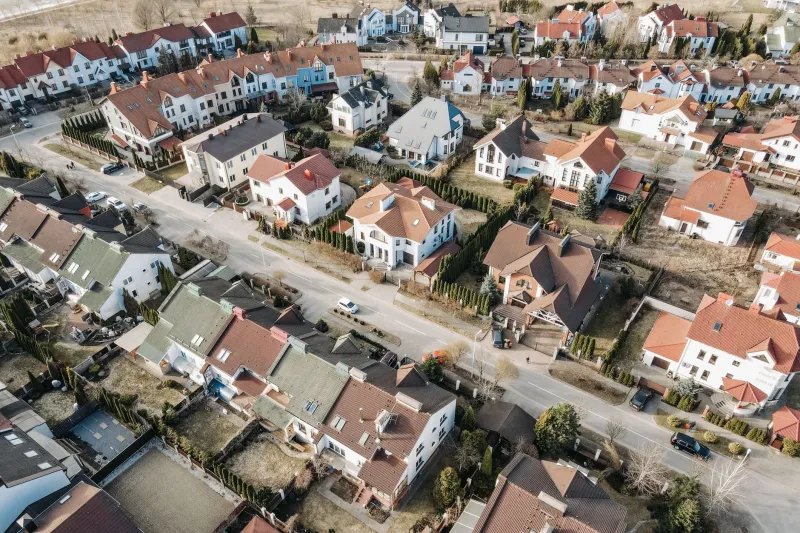
There is a particular kind of neighborhood where the for-sale signs are so rare they become a minor local event. Scarsdale is one of them. Drive through its tree-lined streets on any given weekend and you will encounter a community that appears, on the surface, entirely settled—no open-house balloons, no freshly staked yard signs, no clusters of couples clutching printed floor plans. And yet, if you pull up the market data, you will find that property values here have been rising with quiet persistence for decades. The paradox is real, and it is worth understanding.
When Low Inventory Becomes a Feature, Not a Bug
Conventional real estate wisdom treats low inventory as a temporary imbalance—a gap between supply and demand that markets eventually correct. Scarsdale challenges that assumption. The community's limited turnover is not a symptom of stagnation. It is, in large part, a product of satisfaction. Residents who arrived for the schools, the walkability, the train access, and the genuine sense of neighborhood tend to find that those qualities hold up over time. When the original reason for moving somewhere never disappears, neither does the motivation to stay.
This dynamic produces a self-reinforcing cycle. Because few properties come to market, those that do attract disproportionate attention. Buyers who have been waiting—sometimes for years—respond quickly and competitively. Prices reflect that urgency. And when long-term residents observe what their neighbors' homes are fetching, they become even less inclined to sell at what they privately suspect is still below the home's eventual ceiling.
For a prospective buyer at 105 Garth Road, this context matters. Entry into a market this constrained is not simply a housing transaction. It is, in a meaningful sense, an act of joining a community that has already voted with its feet—repeatedly, and over many years.
The Tenure Effect: What Long Ownership Cycles Actually Signal
In markets defined by high turnover, properties change hands frequently enough that pricing is almost continuously recalibrated. Scarsdale operates differently. When the average ownership tenure stretches across decades rather than years, the market loses much of its short-term noise. Prices are not being reset every eighteen months by anxious sellers or opportunistic flippers. They are being set, intermittently, by owners who have no particular urgency and buyers who have already exhausted their alternatives elsewhere.
This tenure effect has a compounding quality. A homeowner who purchased in Scarsdale fifteen years ago and has watched values appreciate steadily is not facing the same psychological calculus as someone in a volatile market who needs to time an exit carefully. The Scarsdale owner holds a position that has grown more valuable with each passing year, and the rational response—absent some compelling life change—is simply to continue holding it.
For the broader market, this means that each transaction that does occur carries unusual weight. A single sale on a given street can set a meaningful precedent for an entire block's perceived value. Buyers and sellers alike understand this, which is part of why negotiations in Scarsdale tend to be measured and deliberate rather than frantic.
How 105 Garth Road Fits Into This Picture
Unit 6F12 at 105 Garth Road occupies a specific position within this broader market dynamic. As a condominium in a well-established building, it offers a different entry point than the single-family homes that dominate most discussions of Scarsdale real estate. But the underlying market forces are the same.
The building sits within a community where residential demand consistently outpaces supply, where neighbors tend to measure their tenure in decades rather than lease cycles, and where the factors that attract residents—proximity to Metro-North, the quality of the school district, the character of the surrounding streets—are structural rather than fashionable. These are not amenities that depreciate with changing tastes. They are fixed attributes of geography, infrastructure, and institutional quality.
For a buyer evaluating 105 Garth Road, the relevant question is not merely what the unit is worth today. It is what it means to hold a position in a market that has historically rewarded patience and penalized hesitation.
The Contrast With the Broader New York Area
To appreciate what makes Scarsdale's market unusual, it helps to consider what it is not. Much of the New York metropolitan area operates on a transactional model—properties are bought, improved, and sold within relatively compressed time horizons. Certain outer-borough neighborhoods experience rapid turnover as demographics shift and new buyers enter. Suburban markets closer to the city can behave almost like urban ones, with pricing that responds sharply to interest rate movements and economic sentiment.
Scarsdale is insulated from much of this volatility, not through any deliberate policy but through the accumulated effect of residents who simply do not want to leave. That insulation is not absolute—no market is entirely immune to macroeconomic pressure—but it has proven durable through multiple cycles. The 2008 financial crisis, the pandemic-era disruptions, the interest rate environment of the early 2020s: each of these tested Scarsdale's market, and each time the community's fundamental desirability provided a floor that more transactional markets lacked.
Reading the Silence in the Market
There is information in what does not happen. When a neighborhood consistently fails to produce sellers despite rising prices, that absence is itself a data point. It suggests that residents do not believe they can replicate what they have—that the combination of location, community, and lifestyle available at their current address is not something they expect to find elsewhere at any price.
For someone considering 105 Garth Road, that collective judgment is worth taking seriously. The neighbors who have stayed for fifteen, twenty, or twenty-five years are not simply creatures of habit. They are people who have watched the broader market, observed their options, and repeatedly concluded that staying put was the superior choice.
That conclusion, repeated across hundreds of households over many years, is the most honest endorsement any address can receive. It does not appear in any marketing brochure. It shows up only in the data—in long ownership tenures, in low inventory figures, and in the quiet persistence of values that keep rising even when almost nobody is selling.
For a prospective resident at 105 Garth Road, the Scarsdale paradox is not a puzzle to be solved. It is a condition to be understood—and, with the right perspective, a compelling reason to act before the next rare opportunity disappears.