From Penthouse to Purpose: Why Accomplished Professionals Are Choosing Scarsdale Over the Manhattan Skyline

There is a particular kind of confidence that comes with having already proven yourself. You have built the career, earned the title, and inhabited the kind of address that once felt like the ultimate validation. The doorman knows your name. The views are extraordinary. And yet, somewhere around your mid-40s, a quiet but persistent question begins to surface: Is this still the life I actually want?
For a growing cohort of mid-career professionals — executives, attorneys, physicians, and entrepreneurs — the honest answer to that question is leading them not to a larger Manhattan apartment, but to a train ride north. Specifically, to communities like Scarsdale, where a different set of values governs the definition of success.
The Counterintuitive Logic of Voluntary Simplification
On the surface, trading a Manhattan penthouse for a well-appointed unit in a Westchester cooperative seems like a step backward. The square footage is smaller. The address carries less social currency in certain rooms. There is no rooftop terrace with panoramic city views.
But the professionals making this move are not operating on surface logic. They are making what behavioral economists might call a second-order decision — one that accounts not just for what an asset looks like on paper, but for what it actually produces in lived experience.
Consider the financial calculus alone. A two-bedroom condominium in a desirable Manhattan neighborhood can easily carry a monthly cost — mortgage, common charges, and taxes combined — that exceeds $8,000 to $12,000 or more. A comparable unit at 105 Garth Road in Scarsdale represents a dramatically different equation, freeing capital that can be redirected toward retirement accounts, investment portfolios, or simply the kind of financial breathing room that reduces chronic stress.
But money, while significant, is rarely the primary driver. What these relocators describe most frequently is a recalibration of time.
What the City Quietly Takes From You
Manhattan is an extraordinary place to be ambitious. It is a considerably harder place to be still. The sensory intensity that energizes a person in their 20s and 30s — the density, the noise, the relentless pace of street-level life — often begins to feel less like stimulation and more like taxation by the time they reach their late 40s.
One recent relocator, a senior partner at a midtown law firm who moved to Scarsdale two years ago, described the transition in terms that many of her peers would recognize. "I realized I was spending enormous energy just managing my environment," she said. "Navigating the lobby, waiting for elevators, dealing with the noise at night — it was friction I had normalized. When I moved, I suddenly had all of that energy back."
This phenomenon — the hidden cost of urban friction — is well documented in quality-of-life research, even if it rarely appears in real estate listings. Scarsdale, by contrast, offers what urban planners sometimes call a low-friction residential environment: walkable but not crowded, connected but not chaotic, socially rich without being socially exhausting.
Scarsdale as a Strategic Address, Not a Consolation Prize
It is worth being precise about what Scarsdale actually offers, because the community is frequently mischaracterized — either romanticized as a sleepy suburb or dismissed as a compromise for those who couldn't hold on in the city.
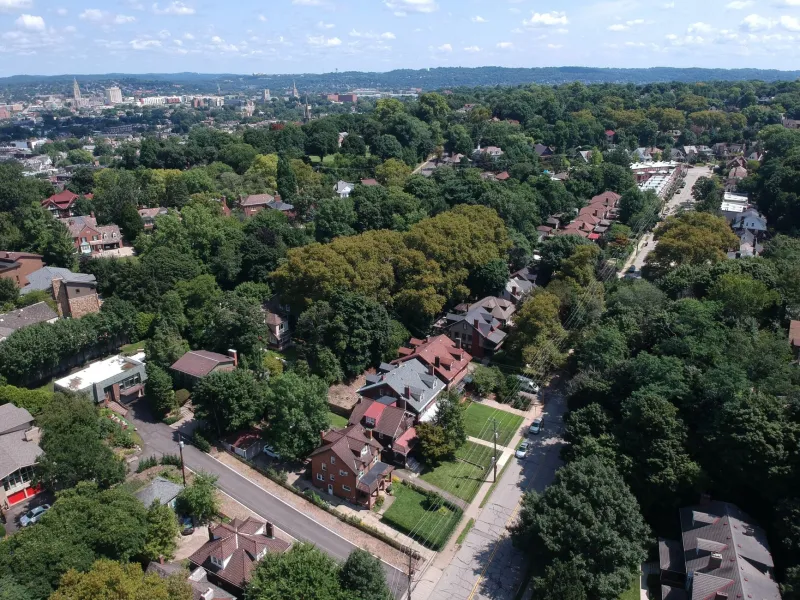
Neither characterization is accurate. Scarsdale is one of the most consistently high-performing residential communities in the northeastern United States, measured by school district quality, property value stability, civic infrastructure, and resident income levels. Its proximity to Grand Central Terminal via Metro-North — approximately 35 minutes on an express train — means that professionals who relocate here do not surrender their Manhattan careers. They simply change their relationship to the city, visiting it on their own terms rather than being consumed by it.
For mid-career professionals who still maintain active professional lives in the city, this is not a minor distinction. It is the difference between living inside a pressure system and being able to step outside of it each evening.
Why Compact Living Appeals to This Demographic
There is a certain irony in the fact that accomplished professionals, who have spent decades accumulating resources, are increasingly drawn to smaller, more intentional living spaces. But the irony dissolves under examination.
By their 40s and 50s, many professionals have already furnished and maintained large homes, managed the logistics of excess square footage, and discovered that possessions require more tending than they initially appeared to. The appeal of a well-designed, efficiently proportioned unit is not scarcity — it is clarity.
The units at 105 Garth Road are specifically suited to this mindset. The building's cooperative structure encourages a particular kind of resident: one who values stability, community standards, and long-term investment over transient occupancy. The floor plans, while compact by suburban house standards, have been inhabited and adapted by residents who understand how to make thoughtful use of every square foot. Storage solutions, natural light, and layout efficiency become not afterthoughts but primary design considerations.
For a professional who has spent years managing complexity, there is genuine relief in a home that does not demand constant management.
The Social Dimension: Community Without Performance
One aspect of this transition that surprises many relocators is the quality of the social environment they encounter in Scarsdale. Manhattan social life, particularly at the professional tier, often carries an undercurrent of performance — the right restaurant, the right event, the right association. It is stimulating, but it is also tiring in ways that are difficult to articulate until you are no longer inside it.
Scarsdale offers something different: the kind of community where neighbors actually know one another, where civic participation is genuine rather than strategic, and where relationships tend to form around shared values rather than shared ambitions. For professionals who have spent decades in highly competitive environments, this shift in social register is frequently described as one of the most unexpected and welcome aspects of the move.
At a building like 105 Garth Road, where the cooperative structure itself encourages resident investment in the community, this dynamic is particularly pronounced. Residents are not passing through. They are, in the fullest sense, neighbors.
A Different Measure of Arrival
The professionals who make this move are not abandoning their standards. They are refining them. They are choosing to define a successful address not by its zip code's brand recognition, but by the quality of daily life it consistently delivers.
In that sense, the move from a Manhattan penthouse to a considered, well-located Scarsdale residence is not a step down. It is a step into greater precision — a deliberate alignment of where one lives with how one actually wants to live.
For those at that particular inflection point, 105 Garth Road merits serious consideration. Not as a compromise, but as a conclusion reached by people who have thought carefully about what they are optimizing for.