Neighbors You Actually Know: The Quiet Case for Mid-Sized Residential Living

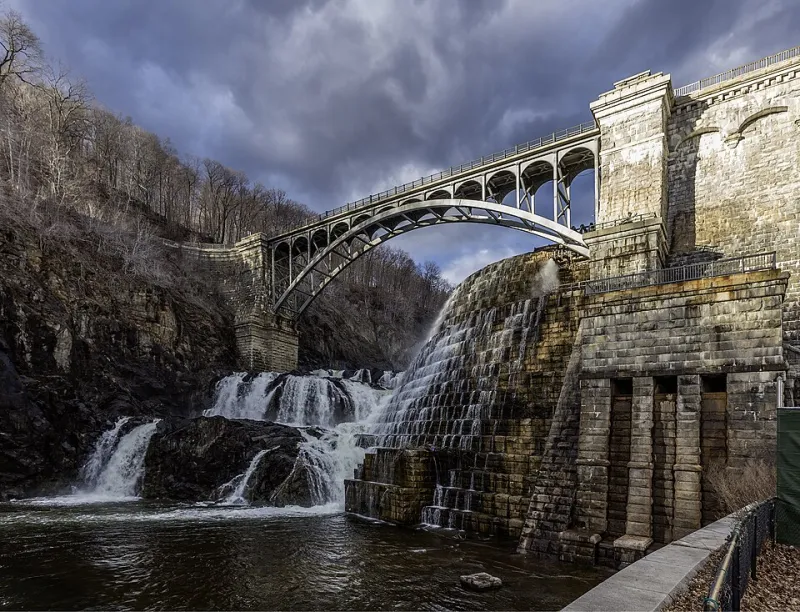
Photo by Photo by Joel Durkee on Unsplash on Unsplash
Somewhere between the anonymity of a high-rise tower and the isolation of a sprawling suburban subdivision lies a residential sweet spot that relatively few people think to seek out deliberately. It is the mid-sized building — the kind where the elevator holds a familiar face, where a neighbor notices when your mail has been sitting uncollected, and where a shared hallway gradually becomes something closer to a shared life.
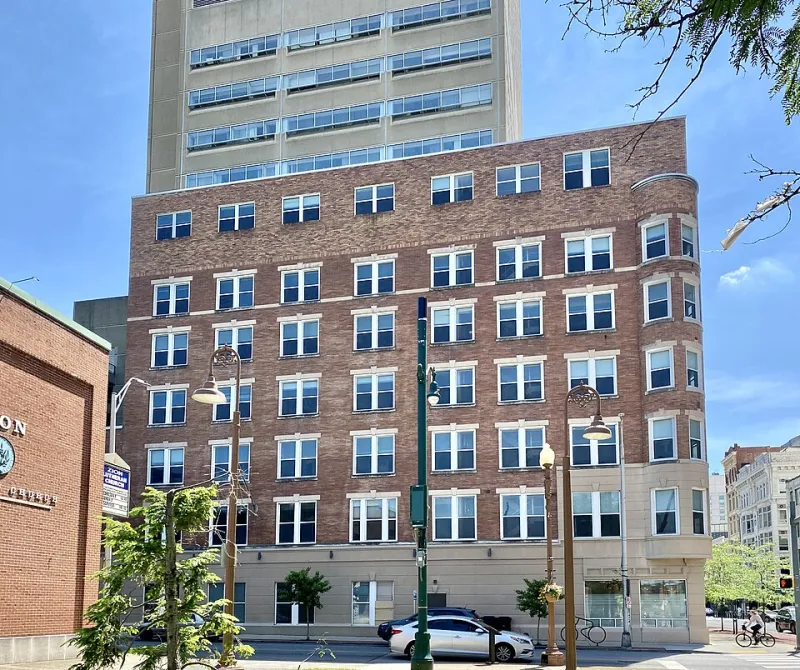
105 Garth Road is that kind of place. And while the term "community" gets applied liberally to residential developments of every scale and character, the version that exists here is worth examining on its own terms — because the social architecture of a building this size produces outcomes that neither larger complexes nor detached suburban homes tend to replicate.
The Scale Problem in Modern Housing
Large luxury residential developments have become the dominant aspirational model in many American markets. They offer amenity packages that read impressively on a brochure: rooftop terraces, concierge services, fitness centers, coworking lounges. What they often cannot offer — despite the marketing language — is a genuine sense of community.
The reason is structural. When a building houses several hundred units, the probability of forming meaningful relationships with more than a handful of fellow residents approaches zero. Faces in the lobby rotate. Neighbors are strangers who happen to share a zip code. The amenity spaces, though well-appointed, tend to attract parallel solitude rather than genuine interaction.
Psychologists who study social belonging have identified what is sometimes called the "social glue" problem in large residential environments: the sheer number of people present actually reduces the likelihood that any two individuals will invest in a relationship, because the cost-benefit calculus of initiating connection feels uncertain when the pool of potential acquaintances is vast and largely unknown.
Smaller buildings invert this dynamic entirely.
Familiarity as a Foundation
In a mid-sized residential community, repeated exposure to the same individuals across months and years creates the conditions that social scientists identify as foundational to genuine friendship: proximity, frequency, and unplanned interaction. The neighbor you nod to in the lobby on Monday becomes the person you chat with on Wednesday, and eventually the person you trust with a spare key.
This is not a romanticized notion. It is the ordinary outcome of living at a scale where people are recognizable to one another. Research published in social psychology literature has consistently found that mere familiarity — encountering the same person regularly, even without deliberate effort — significantly increases the likelihood of positive social evaluation and eventual relationship formation.
At 105 Garth Road, the building's character supports exactly this kind of organic familiarity. The common spaces are sized for actual use rather than visual impression. The resident population is stable enough that turnover does not constantly reset the social landscape. The result is an environment where connection is not engineered through programming or forced social events, but simply allowed to develop through the natural rhythms of residential life.
The Practical Value of Knowing Your Neighbors
Beyond the psychological dimension, there are concrete, practical advantages to living in a community where residents recognize and look out for one another.
Security is one. Buildings where neighbors know each other have lower rates of both petty theft and unreported concerns, because residents are more likely to notice and respond to something that seems out of place. The informal surveillance of a familiar community is a genuine deterrent — and a genuine reassurance.
Package delivery, plant watering, and pet care during travel are mundane examples, but they illustrate a broader point: a neighbor you know is a neighbor you can ask for help. In a building where anonymity is the norm, those small logistical dependencies become problems to be solved commercially. In a community where relationships exist, they become opportunities for reciprocity.
For families with children, the value compounds further. A child who knows the neighbors on their floor has a wider circle of trusted adults within immediate reach. Parents gain the informal support network that previous generations found in neighborhoods and that has become increasingly rare in both urban high-rises and suburban cul-de-sacs.
Belonging as a Housing Feature
The real estate industry has grown sophisticated at quantifying physical attributes — square footage, ceiling height, appliance specifications, proximity to transit. It has been considerably less adept at accounting for the social character of a residential environment, which is harder to photograph and impossible to reduce to a line item.
And yet, belonging — the sense of being known and rooted in a place — is among the most consistent predictors of residential satisfaction. Survey after survey of long-term renters and homeowners finds that relationships with neighbors rank among the top factors in whether people feel genuinely happy in their homes, often outweighing amenity packages and even square footage.
This matters particularly in upper Westchester, where many residents are navigating a transition — from a denser urban environment, from a phase of life that demanded something different, or simply toward a home that reflects a more considered set of priorities. The mid-sized building offers a landing point that is neither isolating nor overwhelming: a community legible enough to belong to.
What Residents Tend to Discover
Those who have lived at 105 Garth Road for more than a year often describe a shift in how they relate to the building itself. What begins as a practical address gradually becomes something more — a place with its own social texture, its own cast of familiar characters, its own small traditions and shared references.
This is not an accident of luck or an exceptional feature of any particular group of residents. It is the natural consequence of a building scaled for human recognition. When people can know one another, they often do. And when they do, the address stops being merely a location and becomes, in the fullest sense of the word, a home.
For anyone evaluating where to live next, that distinction is worth weighing carefully.