The Appreciation Equation: What Actually Drives Long-Term Property Value in Upper Westchester

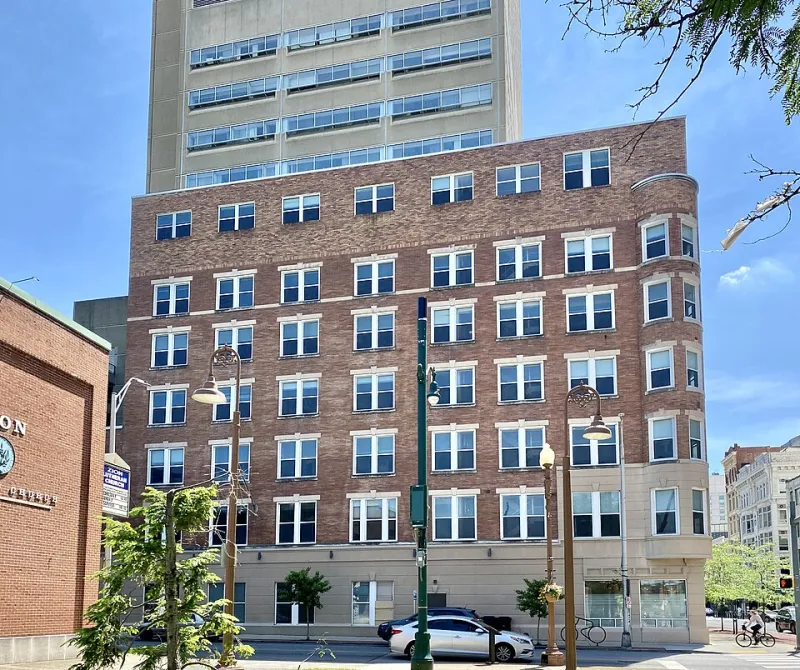
Photo: Acroterion, CC BY-SA 4.0, via Wikimedia Commons
Property appreciation is perhaps the most discussed and least understood concept in residential real estate. Buyers routinely overweight factors that feel significant — a renovated kitchen, a finished basement, a south-facing exposure — while underweighting the structural, location-based characteristics that the data consistently rewards over time. In upper Westchester, where the market carries its own distinct dynamics, this gap between perception and performance has real consequences for long-term wealth building.
This article examines the drivers of sustained appreciation in the upper Westchester market, drawing on transaction data spanning more than a decade and informed by conversations with brokers and appraisers active in the region. The findings challenge several common assumptions and point toward a clearer framework for evaluating where value is genuinely created — and where it merely appears to be.
What the Data Actually Shows
Between 2013 and 2024, median home prices across Westchester County increased by approximately 42 percent in nominal terms, according to data compiled from New York State property transfer records and regional MLS archives. However, this aggregate figure obscures significant variation at the sub-market level. Certain villages and hamlets within the county outperformed that average by a substantial margin, while others lagged considerably — even during the pandemic-era surge that lifted prices broadly across the Northeast.
The villages that demonstrated the most durable appreciation — defined here as consistent gains across both rising and contracting market cycles — share a recognizable set of characteristics. They are served by express Metro-North service to Grand Central. They contain a functioning, walkable downtown with retail, dining, and services. Their school districts carry strong reputations that have remained stable over time. And their housing stock, while varied, includes a meaningful proportion of multi-family and condominium product that provides entry-level access to the market.
Scarsdale, which encompasses the address at 105 Garth Road, consistently appears among the top performers on each of these dimensions.
The School District Premium: Real, But Nuanced
It is broadly understood that school district quality correlates with property values. What is less frequently examined is the degree to which this relationship is stable versus cyclical.
Districts with strong reputations built over decades — ones whose rankings have remained relatively consistent across state assessments and independent evaluations — tend to produce more reliable appreciation than districts whose performance fluctuates with administrative changes or demographic shifts. Buyers and appraisers alike assign a durable premium to predictability.
Scarsdale Union Free School District has maintained a position among the top-ranked districts in New York State for a period that significantly predates the current data window. This consistency functions as a form of risk mitigation for buyers: the educational quality that informed their purchase decision is unlikely to erode materially over the holding period of a typical residential property.
For condominium buyers at 105 Garth Road, this dynamic is particularly relevant. While the unit itself does not include the school-district-driven demand that a single-family home might attract from families with school-age children, the district's reputation elevates the desirability of the entire Scarsdale address — and, by extension, the resale pool of potential buyers.
Transit Access: The Compounding Variable
Among the factors that real estate professionals in upper Westchester identify most consistently as durable value drivers, proximity to express Metro-North service ranks near the top. This is not a new observation, but its implications are worth examining in detail.
Properties within a comfortable walking distance of a Metro-North station — generally understood as a half-mile or less — command a measurable premium over otherwise comparable properties that require driving or a connecting bus. Studies conducted by the Regional Plan Association and the New York Metropolitan Transportation Council have quantified this premium at between 5 and 10 percent in Westchester communities with strong rail service.
More importantly, this premium has demonstrated resilience across market cycles. During periods when Manhattan employment contracts and commuter demand softens, transit-proximate properties tend to retain value more effectively than car-dependent alternatives. The reasoning is straightforward: the optionality of convenient transit access remains valuable even when it is used less frequently.
105 Garth Road's proximity to Scarsdale station — the building is walkable to the platform without requiring a vehicle — places it squarely within the premium-capture zone that this research identifies.
The Renovation Trap
One of the most persistent misconceptions in residential real estate is that cosmetic renovation reliably produces proportional appreciation. The data in upper Westchester, as in most mature markets, tells a more complicated story.
Kitchen and bathroom renovations do increase a property's marketability and can accelerate a sale. However, the return on investment for these improvements — defined as the increase in sale price relative to renovation cost — frequently falls below 100 percent in the Westchester market, particularly for high-specification finishes that appeal to a narrower buyer pool. A $60,000 kitchen renovation that produces $40,000 in additional sale price is, by any objective measure, a financial loss.
The properties that have appreciated most reliably in upper Westchester over the past decade are not necessarily those with the most recent renovations. They are those with the structural location advantages — transit, schools, walkability — that no renovation can replicate. A well-maintained unit in a strategically located building will, in most market conditions, outperform a lavishly renovated unit in a less advantaged location.
This is not an argument against maintaining or improving a property. It is an argument for understanding which variables the market actually prices at a premium.
Village Infrastructure: The Underappreciated Driver
A factor that receives less attention than it deserves in appreciation analysis is the quality and stability of a community's walkable village infrastructure — the presence of locally owned businesses, restaurants, professional services, and civic institutions within the immediate neighborhood.
Scarsdale village center, which sits adjacent to 105 Garth Road, exemplifies this characteristic. The concentration of retail, dining, and services within walking distance of the building creates a quality-of-life proposition that buyers consistently value — and that has proven difficult to replicate in communities where commercial activity is dispersed across strip malls or has migrated to regional centers.
Brokers active in the Scarsdale market note that buyers increasingly cite walkability and village access as primary criteria, a trend that accelerated during the pandemic and has not meaningfully reversed. For a condominium buyer evaluating 105 Garth Road, the village's walkable infrastructure represents a form of embedded value that does not appear on any renovation checklist but registers clearly in comparative sale prices.
Applying the Framework
For any buyer or renter evaluating an address in upper Westchester, the appreciation framework that emerges from this analysis suggests a straightforward set of questions:
- Is the property within walking distance of express Metro-North service?
- Does it sit within a school district with a documented, stable record of academic performance?
- Is it proximate to a functioning, walkable commercial center?
- Does the surrounding housing market include sufficient transaction volume to support liquidity at resale?
For 105 Garth Road, Unit 6F12, the answer to each of these questions is affirmative. That alignment with the characteristics that the data most consistently rewards is not coincidental — it reflects the fundamental locational logic that has made the Scarsdale address a durable performer across market cycles.
Appreciation, ultimately, is not a matter of luck or timing alone. It is the product of structural advantages that compound over time. Understanding which advantages are real — and which are cosmetic — is the beginning of a sound real estate decision.