Staying Put as Strategy: The Generational Wealth Case for Committing to One Westchester Address
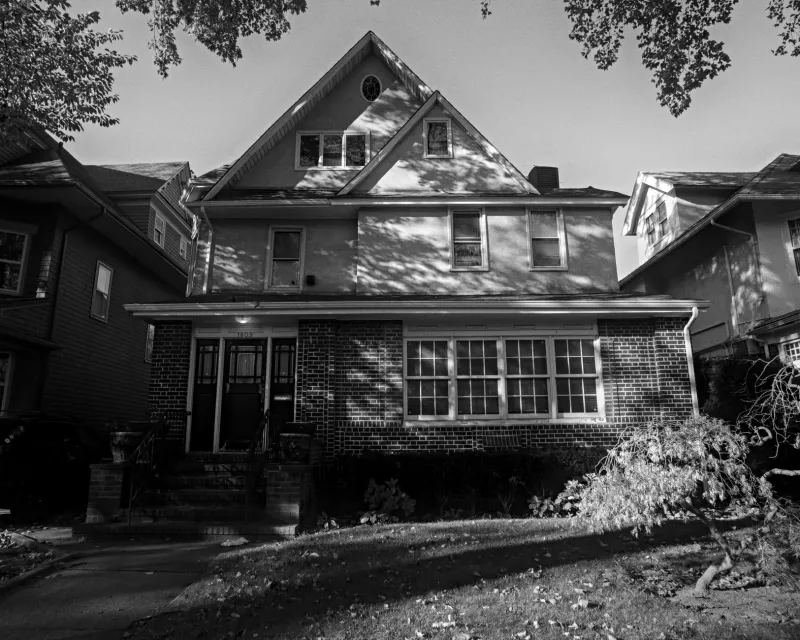
There is a particular kind of financial wisdom that rarely appears in personal finance columns or real estate seminars. It does not involve timing the market, leveraging equity into a larger footprint, or chasing the next appreciating ZIP code. It involves, rather counterintuitively, doing very little at all — at least in terms of moving. For families anchored to a thoughtfully chosen Scarsdale address, the passage of time itself becomes the primary wealth-building instrument.
The modern housing market encourages a restless logic. Each life stage seems to demand a corresponding property upgrade: the starter unit gives way to the family home, which eventually yields to the downsized retreat. Every transaction feels like progress. Yet each transaction carries with it a constellation of costs — broker commissions, transfer taxes, moving expenses, mortgage resets, and the quiet erosion of accumulated equity — that rarely appear in the mental accounting most households perform when weighing a move.
What follows is not an argument against all residential transitions. It is, rather, a case for understanding precisely what is surrendered when a well-situated long-term address is abandoned in favor of something newer, larger, or simply different.
The Compounding Logic of Unrealized Gains
Property appreciation is most commonly discussed in annualized percentage terms, which can make the numbers feel abstract. But the actual mechanism of long-term residential wealth is closer in character to compound interest than to a simple linear return. A property purchased in a stable, high-demand Westchester community and held for two or three decades does not merely appreciate — it appreciates on an ever-larger base, while simultaneously generating what economists sometimes describe as imputed rent: the ongoing value of housing oneself without paying a landlord.
Scarsdale's residential market has historically demonstrated the kind of price resilience that supports this compounding dynamic. The community's structural advantages — limited developable land, consistent demand from Manhattan-adjacent professionals, and an internationally recognized school district — function as a floor beneath property values during downturns and an accelerant during expansionary periods. For a household that purchased at 105 Garth Road and remained, these conditions work silently and continuously in the background of daily life.
The tax treatment of long-term ownership amplifies this effect considerably. Under current federal law, married couples filing jointly may exclude up to $500,000 in capital gains from the sale of a primary residence, provided they have lived there for at least two of the preceding five years. For a property held over decades in an appreciating market, this exclusion can represent a substantial shield against what would otherwise be a significant tax liability. Frequent movers, by contrast, may find themselves cycling through this exclusion repeatedly without ever accumulating the kind of gain that makes the exclusion truly valuable.
What Mobility Actually Costs
The financial case against frequent moves is more concrete than many households realize. Consider a conservative estimate: a residential transaction in Westchester typically involves a combined buyer-seller cost of six to ten percent of the property's value when broker fees, attorney costs, title insurance, and applicable transfer taxes are tallied. On a $600,000 transaction, that figure approaches $60,000 — capital that permanently exits the household's balance sheet and cannot be recovered through appreciation alone for several years.
Beyond the transactional costs lies the subtler issue of mortgage reset. A household that refinances or purchases anew sacrifices the amortization progress accumulated on an existing loan. In the early years of a standard 30-year mortgage, the overwhelming majority of each payment services interest rather than principal. A family that moves every seven to ten years may spend decades in this interest-heavy phase, building equity far more slowly than a neighbor who simply remains.
At 105 Garth Road, where unit sizes are calibrated for efficient, comfortable living rather than excess square footage, the temptation to upgrade on the basis of space alone is worth examining critically. A well-designed compact residence that meets a household's genuine functional needs does not become inadequate simply because the market offers larger alternatives. The discipline of staying — and investing the difference — frequently produces outcomes that dwarf whatever lifestyle enhancement a larger unit might have provided.
Community Integration as a Financial Asset
The wealth-building case for long-term residency extends beyond spreadsheets. Deep community integration — the kind that accumulates only over years of sustained presence — carries measurable financial value that is rarely captured in property valuations.
Long-term residents of established communities tend to develop professional and social networks that generate economic opportunity. School relationships become business relationships. Neighborhood familiarity translates into local knowledge that informs better decisions about contractors, service providers, and property improvements. The social capital built through years of participation in a community is, in the truest sense, a form of capital — one that mobile households perpetually sacrifice and must rebuild from scratch.
For families with children, the case intensifies. Educational continuity — the ability to progress through a single, high-performing school system from kindergarten through graduation — is both an academic and a social asset. The Scarsdale school district's reputation is not merely a marketing point; it is a documented contributor to college placement outcomes and, by extension, to the long-term earnings trajectory of the students it serves. A family that moves away during the middle school years in pursuit of a larger home may be trading a durable educational advantage for square footage.
The Empty Nest Calculation
Perhaps the most underappreciated dimension of long-term residential commitment is what happens after children leave. Conventional wisdom encourages downsizing at this stage, and for some households the logic is sound. But for residents of a well-located, efficiently sized Scarsdale address, the empty nest period may actually represent the moment when staying becomes most financially rational.
Mortgage balances are substantially reduced or eliminated. Property taxes, while a genuine carrying cost, are fixed and predictable. The asset that has been quietly appreciating for two decades is now unencumbered, generating the full economic benefit of its location without the drag of debt service. Meanwhile, the social infrastructure built over years of community participation continues to yield dividends in the form of relationships, belonging, and the particular ease that comes from knowing a place deeply.
Downsizing into a new property resets this entire accumulation. It introduces transaction costs, potentially new debt, and the social friction of reestablishing oneself in an unfamiliar community — all at a life stage when stability tends to carry premium value.
A Different Kind of Ambition
The residential market rewards a certain kind of restlessness with the appearance of progress. Each move generates activity, decision-making, and the tangible satisfaction of something new. But the families who build the most durable wealth through real estate are frequently those who recognize early that their address is not a temporary staging ground for something better — it is the asset itself.
For residents of 105 Garth Road, that asset sits at the intersection of transit access, educational excellence, community depth, and Westchester's enduring demand fundamentals. The compounding effect of remaining at that intersection — through career changes, family growth, and the quiet transitions of middle age — is not a passive outcome. It is the result of a deliberate, if understated, form of financial discipline.
In a market that celebrates movement, staying put may be the most sophisticated decision of all.