The Hidden Dividend of Walking: Counting the True Returns of a Pedestrian-Friendly Address

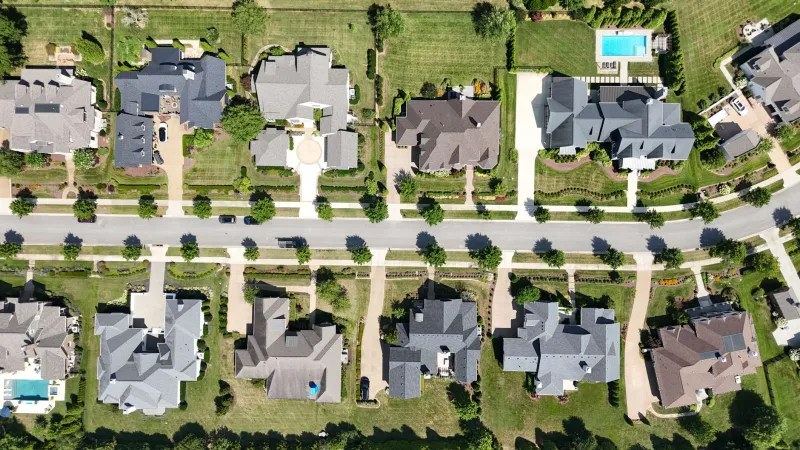
Photo: Helgi Halldórsson from Reykjavík, Iceland, CC BY-SA 2.0, via Wikimedia Commons
Real estate conversations have a tendency to treat walkability the way they treat a pleasant view or an updated kitchen—as a nice-to-have, a quality-of-life flourish that justifies a modest premium but doesn't belong in the serious financial analysis. That framing deserves to be challenged. For residents of 105 Garth Road, the pedestrian accessibility of the surrounding Garth Road corridor isn't simply a convenience. It is, when examined carefully, a recurring economic benefit that accumulates across years and touches nearly every category of household expenditure.
The case for walkability as a financial asset requires moving through several layers of analysis: direct transportation savings, healthcare cost differentials, time economics, and ultimately, the effect on property value itself. Each layer adds to the argument. Together, they suggest that the decision to live within walking distance of daily necessities is among the most financially consequential choices a household can make—even if it rarely appears in that light.
The Vehicle Equation Rewritten
The American Automobile Association estimates that the average annual cost of owning and operating a single vehicle in the United States now exceeds $12,000 when depreciation, insurance, fuel, maintenance, and financing are calculated together. That figure represents a substantial line item in any household budget—one that walkable living can meaningfully reduce.
Residents of 105 Garth Road who commute via Metro-North and conduct their daily errands on foot frequently report that their household has been able to eliminate a second vehicle entirely, or to defer a replacement purchase by several years. The arithmetic is straightforward: a household that avoids one vehicle purchase every decade, saves on insurance premiums, and eliminates routine maintenance costs is retaining tens of thousands of dollars that would otherwise exit the household budget without generating any corresponding return.
The Garth Road area supports this calculus specifically because of what is accessible within a short walk. Grocery options, dining, personal services, and the Scarsdale Metro-North station—a critical link to Manhattan employment—are reachable without a car. That geographic concentration of essential destinations is precisely what makes the financial benefit real rather than theoretical.
Healthcare Spending and the Active Lifestyle Premium
The relationship between walkable neighborhoods and health outcomes has attracted serious academic attention over the past two decades, and the findings are consistent enough to warrant consideration in any honest accounting of residential value. Studies published in the American Journal of Preventive Medicine and similar peer-reviewed journals have documented that residents of high-walkability neighborhoods accumulate significantly more daily physical activity than their car-dependent counterparts—often without deliberate exercise programs or gym memberships.
The downstream financial implications are considerable. The Centers for Disease Control and Prevention estimates that adults who meet recommended physical activity guidelines spend approximately $1,300 less annually on healthcare than sedentary adults. Over a decade of residence, that differential compounds into a figure that rivals or exceeds many conventional financial planning assumptions about investment returns.
For residents at 105 Garth Road, the daily rhythm of walking to the station, to a nearby restaurant, or to a local shop functions as embedded physical activity—exercise that requires no scheduling, no commute to a fitness facility, and no subscription fee. The health dividend arrives quietly, through lower blood pressure, reduced cardiovascular risk, and the kind of sustained energy that makes everything else in a busy household easier to manage.
The Time Economy of a Walkable Block
Time is the resource that household financial planning most consistently undervalues. When a resident of a car-dependent suburb spends forty minutes driving to accomplish an errand that a walkable-neighborhood resident completes in twelve minutes on foot, the difference isn't merely logistical—it has an economic value that can be expressed in dollars if one is willing to assign an hourly rate to personal time.
For professionals who commute from 105 Garth Road into New York City, this time economy is particularly relevant. The ability to consolidate transportation and daily errands into a single walkable radius eliminates the category of driving-related time expenditure that suburban life otherwise makes nearly mandatory. That recovered time can be directed toward professional development, family engagement, or simply the kind of rest that supports long-term productivity—all of which carry genuine economic consequences.
Walkability's Effect on Property Values
Research from the Urban Land Institute and independent real estate economists has established a consistent relationship between walkability scores and property value appreciation. In markets where walkable properties represent a scarce supply relative to demand—a description that applies to many Upper Westchester locations—the premium commanded by pedestrian-accessible addresses tends to be durable rather than cyclical.
This matters for residents of 105 Garth Road not only as a current quality-of-life benefit but as a component of long-term asset value. A property that sits within a walkable community is not simply more pleasant to inhabit; it is more broadly desirable to a future buyer or renter pool, which supports price resilience during market corrections and stronger appreciation during favorable periods.
Compounding Returns on a Simple Decision
The case for walkability ultimately rests on the concept of compounding—the same mechanism that makes long-term financial investing so powerful. Vehicle savings accumulate year after year. Healthcare differentials widen as the benefits of consistent physical activity build over time. Recovered hours multiply across a decade of residence. Property value appreciation reflects the sustained desirability of a pedestrian-friendly address.
None of these returns appear in a standard real estate listing. None are captured by square footage calculations or appliance inventories. But for residents of 105 Garth Road who take the time to count them, the pedestrian accessibility of this address reveals itself as something considerably more valuable than a lifestyle amenity. It is, in the most precise sense, a financial asset—one that pays its dividend every single day.